Eight years in crypto have taught me one thing above all: if you get the incentives wrong, everything downstream breaks. I have been thinking about that in the context of AI over the last few days.
Just yesterday I came across a tweet saying, “Why are most people posting about using AI but not about what they are building?” I think I have an answer.
For more than a year now, the narrative has been “AI will not replace you, but the person who uses AI will.” On the other hand, many enterprises and teams are actively incentivizing usage of more tokens. Technology leaders have said openly that if you’re not using a lot of tokens, you are not a good engineer. I’m paraphrasing here.
What do you think? What is it going to do to the young people looking for opportunities?
On one side, fear is being created, and on the other hand, your potential employer is actively incentivizing using more tokens. What are people going to do?
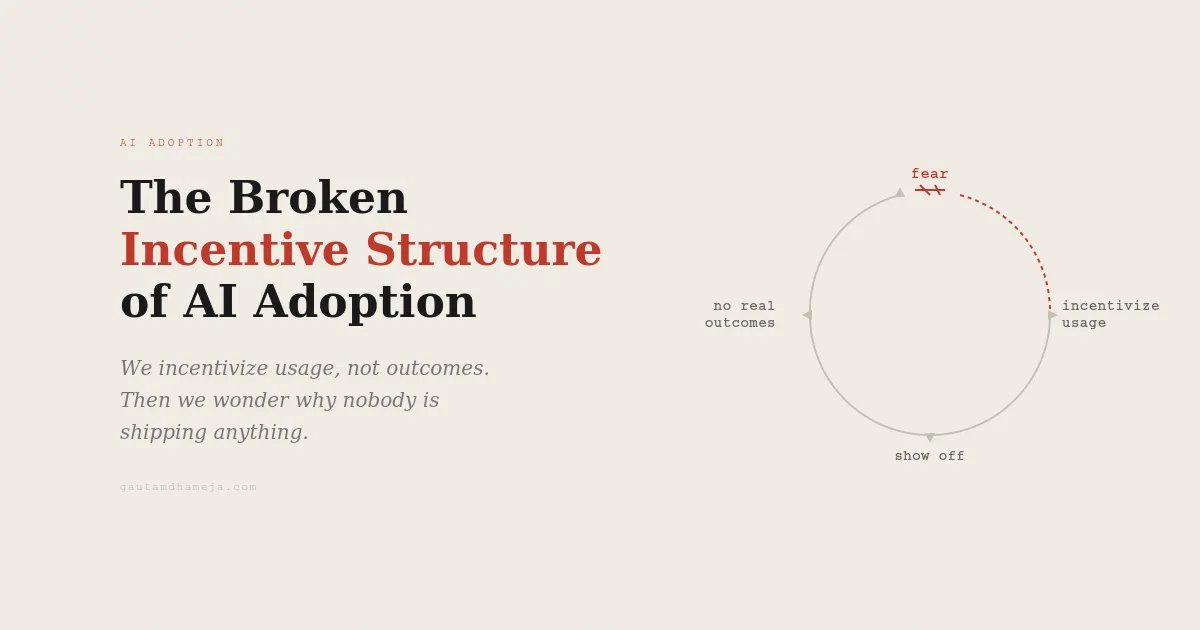
People are going to show off usage of tokens, and that’s it. The fear of losing the job to someone who uses AI kills the creativity, and the incentive to use more tokens reduces the focus on output.
This is the incentive.
If you use more tokens, if you post about running more agents, you are showing that you are supposed to be replaced. You are actively using AI, so you should be hired; you end up creating more slop, and this is the whole circle. If you incentivize wrong behavior, people will continue to do that until you stop incentivizing it.
Instead of asking why are people doing this, why are we not asking why we are incentivizing this?
Recruiters and hiring managers actively ask candidates to show what they are building in public using AI. What are we incentivizing here? These are probably the same people who ask why we have this AI slop everywhere.
So many X threads are filled with multiple agent screenshots. Most Linkedin posts are about comparing models and what to use and what not to do. But very few people are talking about what they are building and how it is solving a problem.
We need to ask the incentives questions a little bit more seriously, don’t we?
PS: This post was first published as an X article, here.